
Introduction
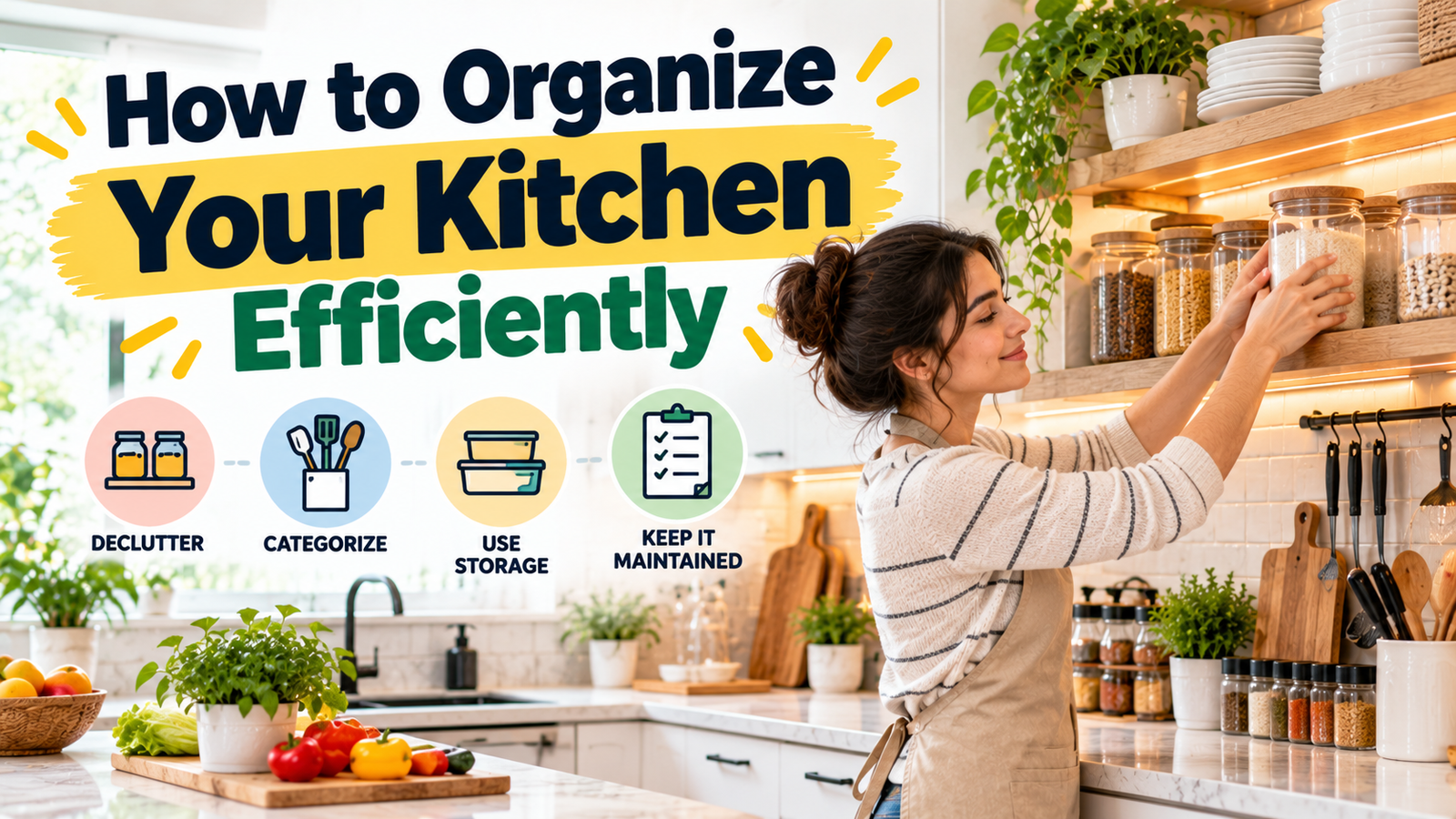
An organized kitchen makes everyday cooking easier, saves time, and helps keep the home clean. Whether you have a large kitchen or a small one, arranging everything properly can make a noticeable difference. In my opinion, a kitchen does not need expensive cabinets, fancy containers, or complicated storage systems to stay organized. What matters most is using the available space wisely and keeping frequently used items within easy reach.
Many people struggle with cluttered countertops, crowded cabinets, overflowing drawers, and difficulty finding cooking ingredients. These problems can make simple tasks feel stressful. However, with a few practical kitchen organization tips, it is possible to create a comfortable and functional cooking space.
In this guide, I will explain how to organize your kitchen efficiently, make better use of storage areas, arrange kitchen utensils, manage food supplies, and maintain a clean kitchen routine. These simple ideas can help beginners create a kitchen that is easier to use every day.
1. Start by Decluttering Your Kitchen
The first step toward an organized kitchen is removing unnecessary items. Over time, kitchens often collect unused utensils, duplicate tools, old food containers, expired ingredients, and appliances that rarely get used.
Before buying new organizers, I recommend checking what you already have. Empty one cabinet or drawer at a time and separate the items into three groups: things you use regularly, things you occasionally need, and things you no longer need.
Keep essential cooking tools and useful appliances. Donate suitable unused items if possible, recycle what can be recycled, and dispose of damaged or unsafe products responsibly.
Check your pantry, refrigerator, and spice collection for expired food. Follow food safety guidance when deciding whether an item is safe to keep.
Decluttering creates additional storage space without requiring extra money. It also makes it easier to see what you own and prevents unnecessary purchases.
2. Arrange Items According to How Often You Use Them
One of the easiest ways to organize a kitchen efficiently is to store items according to how frequently you use them.
Everyday items should be easy to reach, while occasional items can be stored in higher cabinets or less accessible areas.
For example, keep plates, drinking glasses, everyday cutlery, cooking spoons, and frequently used pans near the places where you normally use them. Special baking equipment, large serving dishes, and seasonal kitchen tools can go in less convenient storage spaces.
This arrangement reduces unnecessary movement while preparing meals. It also helps family members return items to their proper places.
Think about your normal cooking routine. If you make tea or coffee every morning, keep the cups, tea, coffee, sugar, and other necessary supplies together. If you frequently prepare vegetables, keep your chopping board and suitable knives close to your preparation area.
The goal is to make common kitchen tasks simple and convenient.
3. Make the Most of Cabinet Space
Kitchen cabinets can hold a surprising number of items when arranged properly. However, stacking everything randomly often leads to wasted space and difficulty finding what you need.
Start by grouping similar items together. Keep plates in one cabinet, glasses in another section, and cooking pots and pans in a suitable lower cabinet.
You can also use shelf organizers to create additional levels for cups, bowls, and plates. These organizers help you use the vertical space inside cabinets without stacking too many items on top of each other.
For deep cabinets, consider placing frequently used items toward the front. Store heavier cookware on lower shelves because lifting heavy objects from high cabinets can be inconvenient and unsafe.
Avoid overfilling cabinets. Items should be easy to remove and return without moving several other objects.
If you rent your home or have a limited budget, simple shelf inserts and adjustable organizers can improve storage without requiring major renovations.
4. Organize Your Kitchen Drawers
Kitchen drawers often become messy because different utensils are placed together without any system. Finding a measuring spoon or vegetable peeler can become frustrating when everything is mixed.
Drawer dividers are a practical solution. They help separate forks, spoons, knives, measuring tools, and other small kitchen accessories.
Use one drawer for everyday cutlery, another for cooking tools, and another for miscellaneous items if your kitchen has enough space.
Keep sharp knives in a knife block, a suitable drawer insert, or another secure storage system that protects the blades and prevents accidental cuts. Do not leave sharp utensils loose in a crowded drawer.
It is also helpful to remove items that do not belong in kitchen drawers. Old receipts, unrelated tools, and broken accessories take up valuable space.
Review your drawers occasionally to prevent clutter from building up again.
5. Create an Organized Pantry
A well organized pantry makes cooking easier and helps reduce food waste. When ingredients are stored properly, you can quickly check what is available before planning meals or shopping.
Start by grouping similar food products together. For example, store rice, flour, pasta, and other grains in one area. Keep canned foods together, place baking ingredients in another section, and organize snacks separately.
Use clear, food safe containers when appropriate. They allow you to see what is inside and make it easier to identify ingredients. Label containers with the food name and, where useful, the purchase or opening date.
Always transfer food into clean, dry containers and ensure the containers are suitable for the specific food. Keep ingredients protected from moisture, heat, pests, and contamination.
Place older products toward the front and newer products behind them. This first in, first out approach helps you use older supplies before opening newer ones.
Keep heavy containers on stable lower shelves and frequently used ingredients within comfortable reach. Store raw food and household cleaning chemicals separately.
6. Arrange Spices and Seasonings Properly
Spices can take up a lot of space when they are stored without a clear arrangement. Small jars may get pushed behind larger containers, making it difficult to find the seasoning you need.
A simple solution is to group spices in a dedicated cabinet, drawer, or shelf. Arrange them alphabetically or according to how you cook. For example, everyday spices can be placed together, while baking seasonings can be kept in a separate section.
Labels are especially useful when spices look similar. Write the name clearly and include a date if you want to track freshness.
Store spices in tightly closed containers away from direct sunlight, heat, and moisture. Avoid keeping them directly beside a hot stove, because frequent exposure to heat and steam can affect their quality.
You do not need to purchase a large matching spice set. Reusing suitable, clean containers can work well as long as they protect the contents and are labeled correctly.
7. Keep Kitchen Countertops Clear
A cluttered countertop makes a kitchen look smaller and reduces the space available for preparing meals.
I recommend keeping only the items you use regularly on the counter. Depending on your routine, these might include a kettle, coffee maker, or a frequently used cooking appliance.
Store rarely used appliances inside suitable cabinets if space allows. Keep cutting boards, serving dishes, and extra utensils in designated storage areas instead of leaving them scattered around the kitchen.
Create a clear preparation area where you can wash, cut, mix, and arrange ingredients comfortably.
Avoid placing too many decorative objects on work surfaces. Although decorations can make a kitchen attractive, they should not interfere with cleaning or food preparation.
Wipe countertops regularly, especially after handling raw meat, poultry, seafood, or unwashed vegetables. Use appropriate cleaning and sanitizing practices for food preparation surfaces.
A clear countertop gives the kitchen a cleaner appearance and makes daily work more convenient.
8. Organize Your Refrigerator Efficiently
An organized refrigerator helps you find food quickly and manage ingredients before they spoil.
Begin by removing expired items and cleaning shelves and drawers as needed. Group similar products together so you can see what is available.
Keep ready to eat foods in suitable covered containers and store raw meat, poultry, and seafood securely on the lowest shelf to prevent juices from contaminating other foods. Follow your refrigerator manufacturer’s recommendations and food safety guidance for storage temperatures and placement.
Use transparent containers when possible so leftovers are easy to identify. Label leftovers with the date they were prepared and follow recommended storage times.
Avoid overcrowding the refrigerator because cold air needs room to circulate. Keep food away from areas where it could freeze unintentionally.
It is also useful to check the refrigerator before grocery shopping. This simple habit helps you avoid buying ingredients you already have and reduces unnecessary food waste.
9. Use Vertical Space Wisely
When kitchen cabinets and countertops are limited, vertical storage can make a significant difference.
Depending on your kitchen layout, you may be able to use wall mounted shelves, hooks, magnetic knife holders, or hanging organizers. These options can keep frequently used tools accessible without taking up valuable counter space.
For example, suitable hooks can hold oven mitts or certain utensils. A wall shelf may provide space for lightweight kitchen supplies, while a rack inside a cabinet can help organize lids and trays.
Always check that wall mounted storage is securely installed and appropriate for the weight it will carry. Keep heavy items away from areas where they could fall on people or cooking surfaces.
If you have a small kitchen, consider the space above your refrigerator or inside cabinet doors, provided the storage method is safe and does not interfere with hinges or ventilation.
The best solution depends on your kitchen size, available wall space, and daily needs.
10. Store Pots, Pans, and Lids Together
Pots and pans can create considerable clutter, especially in small kitchens. Stacking them without a plan makes it difficult to reach the item at the bottom.
Arrange cookware by size and frequency of use. Nest compatible pots together if doing so will not damage their surfaces. Use protective separators for delicate nonstick or coated cookware when appropriate.
Store lids in a vertical rack or a dedicated section of a cabinet. This prevents them from becoming mixed with pans and saves time when cooking.
Keep heavy pots and pans in lower cabinets or sturdy drawers. This makes lifting easier and reduces the risk of accidents.
You can also group cookware according to purpose. For example, keep frying pans together and place baking trays in a suitable vertical organizer.
A simple cookware arrangement can save space and make meal preparation more efficient.
11. Make Cleaning Supplies Easy to Manage
Cleaning supplies should have a designated storage location. Keeping them scattered around the kitchen makes the area look untidy and can create safety risks.
Choose a suitable cabinet or storage area away from food, cooking utensils, and food preparation surfaces. Keep cleaning products in their original labeled containers and follow the manufacturer’s storage instructions.
Store products securely, especially if children or pets can access the kitchen. Never transfer chemicals into food or drink containers, and never mix cleaning products unless the labels explicitly permit it.
Keep dish soap, sponges, cloths, and other everyday cleaning tools organized near the sink, while storing stronger cleaning products separately in a secure location.
Allow reusable sponges and cloths to dry between uses and replace them when needed. Clean the sink and surrounding surfaces regularly to maintain a hygienic environment.
12. Follow a Simple Daily Kitchen Routine
Even a well organized kitchen can become cluttered if items are not returned to their proper places. A short daily routine helps maintain the results of your organizing efforts.
After preparing meals, wash dishes or load the dishwasher, wipe the countertops, clean spills, and return utensils to their designated storage areas.
Put food away promptly and check that containers are closed properly. Sweep the floor when necessary and empty the kitchen bin before it becomes overly full.
Spend a few minutes each evening preparing the kitchen for the next day. Clear the main work surfaces, arrange commonly used items, and check whether anything needs to be restocked.
Once a week, review the refrigerator, pantry, and frequently used drawers. Small adjustments prevent bigger cleaning tasks later.
The key is consistency. A few minutes of regular maintenance can save a considerable amount of time compared with waiting until the entire kitchen becomes messy.
13. Avoid Common Kitchen Organization Mistakes
Some organizing habits can create more problems than they solve. One common mistake is buying too many storage containers before checking the available space. Containers should fit your cabinets and suit the ingredients or utensils you intend to store.
Another mistake is keeping items that are no longer useful. If you have several tools that perform the same function, keep the ones that work best for your routine.
Do not store frequently used items in hard to reach places. An organization system should make your kitchen easier to use, not create additional work.
Avoid placing heavy appliances on unstable shelves or storing heavy cookware overhead. Keep walkways clear and make sure drawers and cabinet doors can open fully.
Finally, do not expect the kitchen to remain perfectly organized without regular maintenance. Household routines change, and your storage system may need occasional adjustments.
Conclusion
Organizing your kitchen efficiently does not require a large budget or a complete renovation. With thoughtful planning, you can create a practical cooking space that saves time, reduces clutter, and makes everyday tasks easier.
Start by removing unnecessary items, grouping similar supplies, arranging cabinets and drawers, and keeping countertops clear. Organize your pantry and refrigerator carefully, use vertical storage where suitable, and keep cookware and cleaning supplies in safe, convenient locations.
In my view, the most effective kitchen organization system is one that fits your daily routine. Every item should have a suitable place, frequently used supplies should be easy to reach, and cleaning should be simple enough to maintain consistently.
Begin with one cabinet or drawer rather than trying to organize everything at once. Small improvements can make a meaningful difference, helping you build a cleaner, more comfortable, and more efficient kitchen over time.