
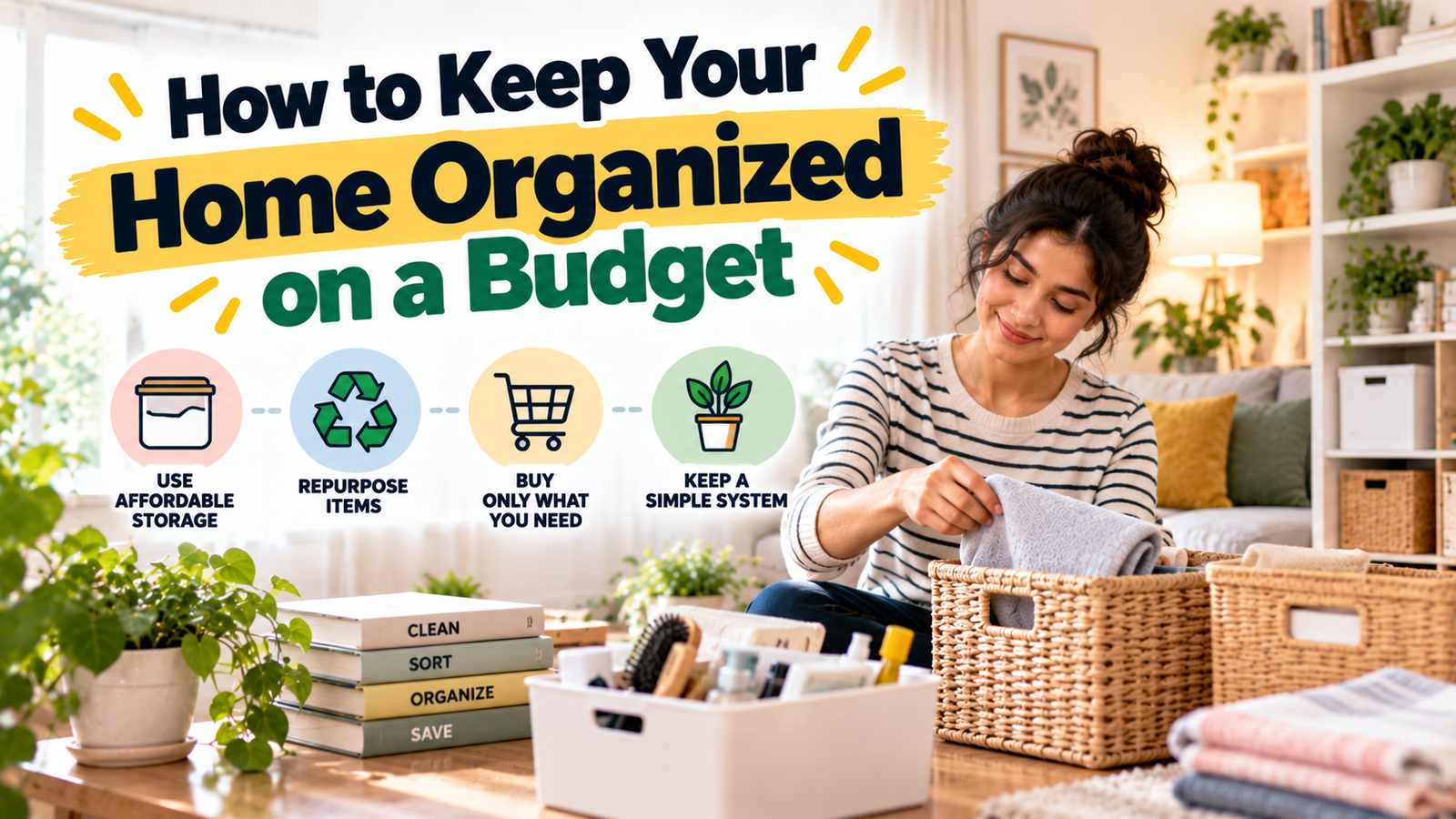
Keeping a home organized does not have to be expensive. Many people believe that an organized home requires costly storage containers, new furniture, decorative baskets, and professional organizing services. In my opinion, the most important part of home organization is not how much money we spend but how wisely we use the space and items we already have.
A clean and organized home can make everyday life easier, reduce stress, and help us find things without wasting time. It can also make a small home feel more comfortable and spacious. With a few simple habits and practical ideas, anyone can create a more organized living environment without putting pressure on their household budget.
In this guide, I will share practical ways to keep your home organized on a budget, from decluttering and reusing household items to creating simple daily routines. These ideas are suitable for apartments, small houses, and family homes of different sizes.
1. Start by Decluttering Your Home
The first step toward budget friendly home organization is decluttering. Before purchasing storage products, I recommend looking at what you already own. Sometimes, the main reason a room looks messy is that it contains too many unnecessary items.
Start with one small area, such as a drawer, a kitchen shelf, or a bedside table. Remove everything and decide which items you actually use. Keep useful belongings, donate items that are still in good condition, and recycle or dispose of things that are no longer needed.
There is no need to organize the entire house in one day. Working on one area at a time makes the process easier and prevents you from feeling overwhelmed.
Decluttering also helps you save money because you may discover storage space you did not realize you had. When you remove unnecessary belongings, you can organize the remaining items more efficiently without buying extra furniture.
2. Use Storage Items You Already Have
One of the easiest ways to organize a home on a budget is to reuse containers and household items. Before buying new organizers, check your kitchen cabinets, closets, and storage areas.
Empty shoe boxes can hold small accessories, cables, stationery, and craft supplies. Clean jars can store buttons, clips, and other small items. Strong cardboard boxes can help organize seasonal clothing or lightweight household belongings.
You can also reuse baskets, trays, and containers that are already available at home. For example, an old tray can keep keys and wallets together near the entrance, while a small box can prevent charging cables from becoming tangled.
Make sure reused containers are clean, dry, and suitable for the items you plan to store. Avoid using damaged containers for heavy belongings or storing food in materials that are not food safe.
The goal is to make better use of existing resources instead of spending money on products that serve the same purpose.
3. Create a Place for Everything
A home becomes difficult to manage when everyday items do not have a fixed place. Keys may end up on the kitchen counter, shoes may remain near the sofa, and important documents may become mixed with unrelated papers.
Creating a designated place for frequently used items can solve many of these problems.
For example, keep keys in a small bowl near the entrance. Store shoes in one specific area and place cleaning supplies together in a suitable cupboard. Keep important documents in a labeled folder so they are easier to find when needed.
Try to return items to their designated places immediately after using them. This small habit prevents clutter from building up over time.
In my view, a simple organization system is more useful than an expensive one. The best system is the one that every household member can understand and maintain without difficulty.
4. Organize Your Kitchen Without Spending Much
The kitchen is one of the busiest areas in most homes. Cooking ingredients, utensils, dishes, and cleaning products can quickly make it look crowded.
Start by removing expired food products and items you no longer use. Arrange frequently used ingredients where they are easy to reach, and keep less frequently used items on higher shelves when safe to do so.
You can reuse clean containers to group small kitchen items, provided they are suitable for food storage. Labels can help identify ingredients and reduce confusion, especially when several products look similar.
Keep everyday utensils near the area where you prepare meals. Store cleaning products separately from food, and make sure potentially harmful substances remain out of reach of children and pets.
Another useful idea is to organize pantry shelves by category. Keep grains together, baking ingredients in one section, and snacks in another. This arrangement makes it easier to check what you already have before shopping.
An organized kitchen can also reduce food waste because ingredients become easier to see and use before their expiration dates.
5. Make Better Use of Small Spaces
You do not need a large house to enjoy an organized home. Even a small room can feel comfortable when its space is used wisely.
Look for areas that are often overlooked, such as the space under a bed, the top of a wardrobe, or an unused corner. These spaces may be suitable for storing seasonal clothing, extra bedding, or other belongings that are not needed every day.
Use vertical space whenever possible. Wall mounted shelves can provide storage without taking up much floor area, although you should only install them securely and where appropriate. If purchasing shelves is not possible, arrange existing furniture and storage containers more efficiently.
Furniture that serves more than one purpose can also help. For example, a storage ottoman can provide seating and a place for blankets. However, you do not need to buy new furniture immediately. First, see whether your current furniture can be rearranged to improve the available space.
Avoid filling every empty corner with storage. Leaving some open space can make a room look cleaner and more relaxing.
6. Organize Your Wardrobe on a Budget
A crowded wardrobe can make getting dressed frustrating, even when you own plenty of clothing. The solution often begins with sorting rather than shopping for new organizers.
Take out your clothes and group them into categories, such as shirts, trousers, everyday wear, formal clothing, and seasonal items. Remove pieces that no longer fit, are uncomfortable, or have not been used for a long time.
Clothing in good condition can be donated or passed to someone who can use it. Damaged clothing may be suitable for repair or reuse as cleaning cloths, depending on the material and condition.
Fold clothes neatly and arrange similar items together. You can also store seasonal clothing in clean, dry containers or reusable bags to free up space in your main wardrobe.
If your hangers are limited, prioritize clothing that wrinkles easily. Fold suitable garments in drawers or on shelves.
Before purchasing wardrobe organizers, try rearranging your existing shelves and hangers. A simple change in arrangement can make a noticeable difference without increasing your expenses.
7. Keep Your Living Room Clutter Free
The living room is often used by the entire family, so it can become messy quickly. Remote controls, books, toys, chargers, and other small belongings may collect on tables and sofas.
A practical solution is to create simple storage zones. Keep books together, place remote controls in one designated spot, and use an existing basket or box for small items that need to be returned to other rooms.
At the end of the day, spend a few minutes putting belongings back where they belong. Fold blankets, arrange cushions, clear unnecessary items from tables, and return dishes to the kitchen.
Try to keep decorative objects to a reasonable number. Too many decorations can make shelves and tables difficult to clean.
If children use the living room, create an accessible place for their toys. A simple box or basket can make cleanup easier and encourage children to participate in keeping shared spaces tidy.
The aim is not to make the living room look perfect all the time. It is to create a space that remains comfortable and easy to maintain.
8. Use Low Cost Labels and Simple Categories
Labels can make home organization easier, especially in kitchens, storage cupboards, and shared family spaces. However, you do not need expensive printed labels to achieve this.
You can write clear labels on reusable paper, adhesive labels, or suitable cards. Attach them to boxes and containers so everyone knows what belongs inside.
For example, storage boxes can be labeled for winter clothing, documents, craft supplies, or holiday decorations. In the kitchen, labels can identify suitable ingredient containers.
Avoid creating too many categories. A complicated system can become difficult to maintain. Instead, use broad categories that match your daily routine.
For shared storage areas, clear labels help family members return items to the correct place. This reduces confusion and makes it easier to maintain order over time.
9. Develop a Simple Daily Cleaning Routine
Home organization is not a one time activity. Without regular maintenance, clutter can gradually return. A short daily routine can help prevent this problem without requiring expensive equipment or hours of work.
Spend around ten to fifteen minutes each day on basic organizing tasks. The exact amount of time will depend on your household size and daily responsibilities.
You might use the morning to make beds and put away clothing. In the evening, clear kitchen counters, return misplaced items, and prepare commonly used belongings for the next day.
You can also assign one small task to each family member. One person may organize shoes while another clears the dining table or puts away toys.
A daily routine works best when it is realistic. Do not create a long list of tasks that becomes difficult to follow. Start with a few simple habits and add more only when necessary.
Consistent small efforts can prevent clutter from becoming a major weekend project.
10. Follow a Weekly Decluttering Schedule
Daily tidying helps maintain order, but some areas need more attention. A weekly decluttering schedule allows you to manage these tasks gradually.
For example, you could organize one kitchen shelf on Monday, sort a drawer on Tuesday, and review clothing on Wednesday. The remaining days can be used for paperwork, bathroom storage, or other areas that need attention.
This approach makes home organization less stressful because you do not have to complete everything at once.
A weekly schedule also helps you notice problems before they become bigger. If a particular area becomes messy repeatedly, consider whether its current storage arrangement is practical.
Sometimes the solution is to move an item closer to where it is used. In other cases, you may need to reduce the number of belongings stored in that area.
The key is to make small improvements regularly instead of waiting until the entire house feels disorganized.
11. Avoid Unnecessary Storage Purchases
Storage products can be useful, but buying too many of them can increase expenses without solving the real problem.
Before purchasing a new container, ask yourself whether you genuinely need it. Check whether an existing box, shelf, drawer, or basket can serve the same purpose.
It is also important to measure available space before buying storage furniture. A container that is too large may make a cupboard harder to use, while an unsuitable organizer can create more clutter.
If you decide to buy something, focus on durable, practical items that solve a specific problem. Compare prices and consider whether the product will remain useful for a long time.
Avoid purchasing organizers simply because they look attractive in pictures. A good storage product should fit your home, belongings, and everyday routine.
Remember that reducing unnecessary possessions is often cheaper and more effective than purchasing additional storage.
12. Teach Family Members to Maintain Organization
Keeping a home organized becomes easier when everyone participates. If one person handles all the cleaning and organizing, maintaining order can become tiring.
Encourage family members to return their belongings to the correct places. Children can learn simple tasks, such as putting toys in a basket or placing shoes in the designated area.
Explain the system clearly and make sure storage spaces are easy for everyone to access safely. If an organizing method is too complicated, simplify it.
You can also agree on a few household rules, such as clearing the dining table after meals and putting away items before bedtime.
These habits help create shared responsibility. They also reduce the amount of time one person needs to spend restoring order throughout the house.
A well organized home is easier to maintain when the system works for the entire household rather than just one person.
13. Set a Realistic Home Organization Budget
Although many organization ideas cost little or nothing, you may occasionally need to purchase supplies. Setting a small budget can help you avoid unnecessary spending.
Begin by identifying the areas that cause the most difficulty. If your kitchen shelves are overcrowded, focus on improving that area first. If clothing is difficult to manage, start with your wardrobe.
Make a short list of items that would genuinely help. Compare prices, check the measurements, and look for affordable options before making a purchase.
You do not need to organize every room immediately. Improving one area at a time allows you to spread costs over several weeks or months.
It can also be helpful to track what you spend. This makes it easier to distinguish useful purchases from items that simply look appealing.
Most importantly, do not feel pressured to create a perfect home. Practical organization should support your daily life, not become another source of financial stress.
Common Home Organization Mistakes to Avoid
Even with a limited budget, a few common mistakes can make organization more difficult.
Buying storage before decluttering: Extra containers cannot solve the problem of having too many unnecessary belongings. Remove unwanted items first.
Trying to organize everything at once: Large projects can feel exhausting. Work on smaller areas and build progress gradually.
Keeping items without a clear purpose: If something is no longer useful, consider donating, recycling, or disposing of it responsibly.
Creating complicated systems: Simple categories and clearly defined storage areas are easier to maintain.
Ignoring daily maintenance: Spending a few minutes returning items to their places can prevent clutter from building up again.
Avoiding these mistakes can help you maintain a more organized home without spending money unnecessarily.
Conclusion
Keeping your home organized on a budget is possible when you focus on practical solutions rather than expensive products. Decluttering regularly, reusing household containers, assigning a place for every item, and following a simple daily routine can make a meaningful difference.
In my view, the best home organization system is one that saves time, reduces clutter, and fits your family’s everyday needs. You do not need to transform your entire house in one day or purchase every storage product available.
Start with one drawer, shelf, or room. Use what you already have, make small improvements, and encourage everyone at home to participate. Over time, these simple habits can help you create a cleaner, more comfortable, and better organized home while keeping your expenses under control.