
Introduction
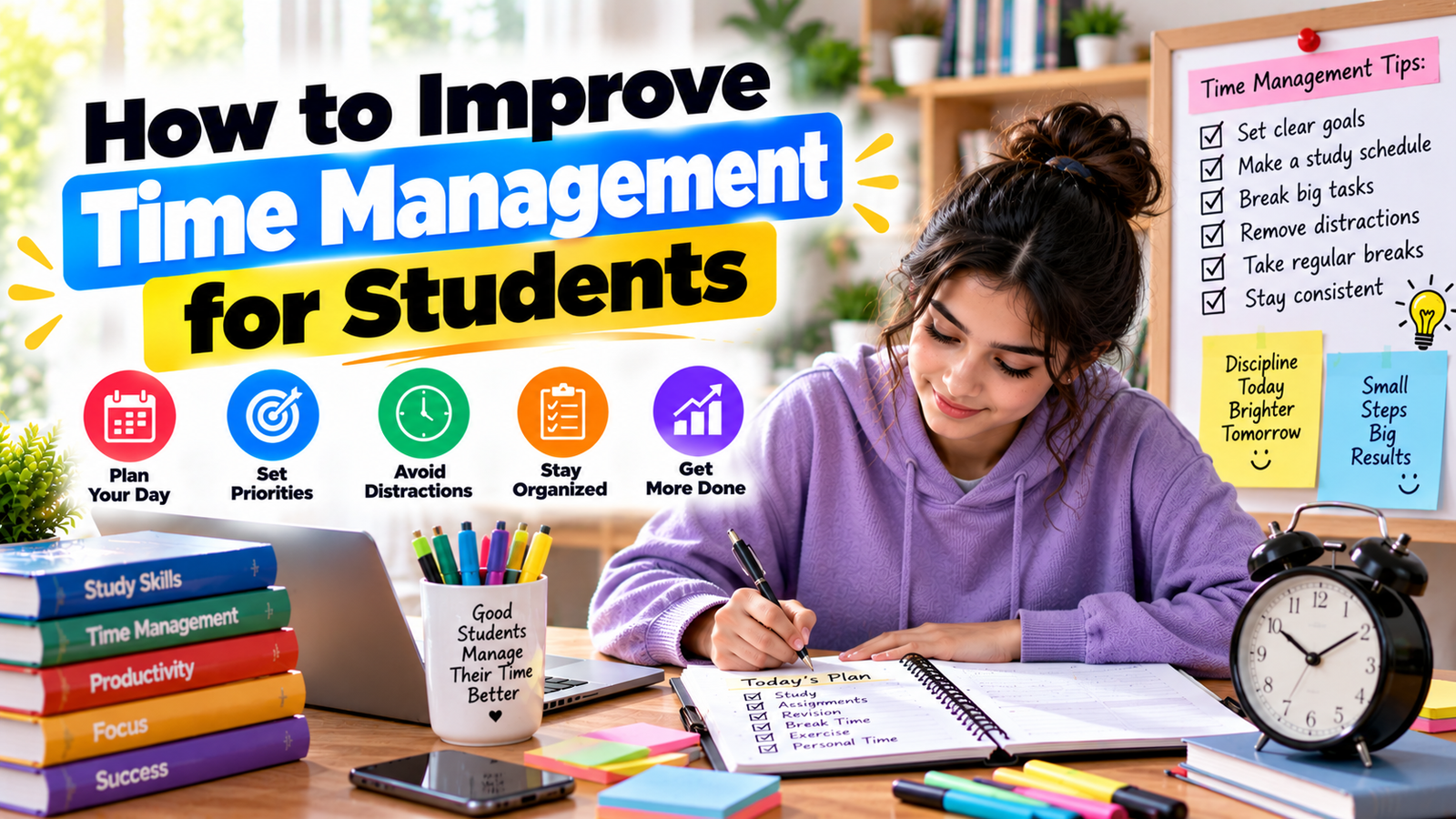
Time management is one of the most important skills students can develop to achieve academic success and maintain a balanced lifestyle. Every student has the same 24 hours in a day, but the way those hours are used can make a significant difference in learning, productivity, and personal well being. Students who manage their time effectively often find it easier to complete assignments, prepare for examinations, attend classes, and make time for other responsibilities.
Many students struggle with time management because they have several tasks to complete but do not know where to begin. School assignments, online classes, examinations, household responsibilities, and social activities can make daily life feel overwhelming. Without a clear plan, students may postpone important work and end up studying late at night or rushing to meet deadlines.
In my opinion, effective time management is not about studying every minute of the day. It is about using time wisely, setting priorities, and developing habits that make learning more organized. Students do not need a complicated system to improve their routines. Simple strategies such as creating a study schedule, setting realistic goals, and reducing distractions can make a meaningful difference.
In this article, I will explain practical ways to improve time management for students and develop a more productive study routine.
1. Set Clear Academic Goals
The first step toward better time management is understanding what you want to achieve. Without clear goals, it can be difficult to decide which tasks deserve attention first.
Start by identifying your academic priorities. These might include completing assignments on time, improving your grades, preparing for an examination, or understanding a difficult subject.
After identifying your larger goals, divide them into smaller tasks that you can complete within a specific period.
For example, instead of setting a general goal such as studying mathematics, decide to complete one chapter and solve ten practice questions. This gives you a clear target and helps you measure your progress.
You can organize your goals into three categories:
Short term goals: Tasks you want to complete today or within a few days, such as finishing homework or reviewing class notes.
Medium term goals: Objectives you want to achieve within several weeks, such as completing a unit or preparing for a test.
Long term goals: Larger objectives, such as improving your overall academic performance or completing a degree.
Review your goals regularly and adjust them when necessary. Setting realistic goals helps you use your time more effectively and prevents you from becoming overwhelmed by a long list of responsibilities.
2. Create a Daily Study Schedule
A daily study schedule helps students understand how their available time will be used. It provides structure and reduces the amount of time spent deciding what to do next.
Begin by listing your regular activities, including school or college classes, meals, travel, household responsibilities, and sleep. Then identify the available periods you can use for studying and completing assignments.
Assign specific tasks to these periods according to their importance and difficulty.
For example, you might study a difficult subject when you feel alert and complete easier revision tasks later in the day.
Here is an example of a simple daily schedule for a student.
| Time | Activity |
|---|---|
| 7:00 AM | Wake up and prepare for the day |
| 8:00 AM to 2:00 PM | Attend school or college |
| 2:00 PM to 3:00 PM | Lunch and rest |
| 3:00 PM to 4:00 PM | Complete homework |
| 4:00 PM to 4:15 PM | Take a break |
| 4:15 PM to 5:15 PM | Study a difficult subject |
| 5:15 PM to 6:00 PM | Exercise or relax |
| 6:00 PM to 7:00 PM | Revise lessons and practice questions |
| Evening | Dinner, personal activities, and preparation for tomorrow |
This is only an example. Your schedule should reflect your classes, responsibilities, and personal needs.
Avoid filling every minute with tasks. Leave some flexibility for unexpected assignments, difficult lessons, and rest. A realistic schedule is easier to follow than an overly demanding one.
3. Prioritize Important Tasks
Not every task has the same level of importance. Learning to prioritize helps students focus on work that matters most.
For example, an assignment due tomorrow may require more immediate attention than reviewing a chapter for an examination several weeks away. However, regularly reviewing the chapter can prevent last minute pressure.
A useful approach is to divide tasks into four groups:
- Important and urgent tasks that need immediate attention.
- Important but less urgent tasks that should be scheduled.
- Less important but urgent tasks that may be completed quickly or handled with help when appropriate.
- Tasks that are neither important nor urgent and can be reduced or postponed.
This approach helps you make better decisions when several responsibilities compete for your attention.
At the beginning of each day, identify the three most important tasks you want to complete. Finish these before spending too much time on less important activities.
If you have several assignments, consider their deadlines, the amount of work required, and their importance to your academic goals.
Prioritization does not mean ignoring small tasks. It means giving your best attention to the activities that deserve it most.
4. Break Large Assignments Into Smaller Tasks
Large assignments can feel difficult when you look at the entire workload at once. This may cause procrastination, especially when the deadline seems far away.
Breaking an assignment into smaller steps makes the work easier to manage.
For example, if you need to write an essay, divide the assignment into separate activities:
- Understand the instructions.
- Research the topic.
- Prepare an outline.
- Write the first draft.
- Review and edit the content.
- Submit the final assignment.
Give each step a realistic deadline. You might complete the outline on Monday, write the first draft on Tuesday, and revise the essay on Wednesday.
This approach reduces pressure and gives you more opportunities to identify mistakes before submitting your work.
The same method works for examinations. Instead of planning to study an entire textbook in one day, divide it into chapters and topics.
Completing smaller tasks also provides a sense of progress. Each finished step brings you closer to your overall goal.
5. Avoid Procrastination
Procrastination is one of the biggest obstacles to effective time management for students. It happens when you delay an important task even though you know it needs to be completed.
Students may procrastinate because a task seems difficult, boring, stressful, or time consuming. Sometimes, distractions such as social media and online videos make delaying work more appealing.
One useful strategy is the five minute rule. Tell yourself that you will work on a task for just five minutes. Start by opening your textbook, reading the instructions, or completing the first question.
Beginning often makes a task feel less intimidating. Once you get started, you may find it easier to continue.
You can also reduce procrastination by setting personal deadlines before the actual due date. This gives you extra time to review your work and deal with unexpected problems.
Avoid waiting until you feel completely motivated. Motivation can change throughout the day, but a consistent routine helps you begin even when you do not feel enthusiastic.
The key is to take small actions instead of repeatedly postponing important work.
6. Use the Pomodoro Technique
The Pomodoro Technique is a time management method that divides work into focused sessions separated by short breaks.
A common version involves studying for 25 minutes and then resting for five minutes. After completing four sessions, you take a longer break.
For example, you might spend one session reading a science chapter, another solving mathematics questions, and a third reviewing vocabulary.
You can adjust the timing to suit your concentration level. Some students prefer 40 minutes of studying followed by a ten minute break.
During each session, focus on one specific task. Avoid checking messages, browsing unrelated websites, or switching between subjects unnecessarily.
During breaks, stand up, stretch, drink water, or walk around for a few minutes.
This method can make long study periods feel more manageable and help you maintain attention. However, it is not necessary to follow a strict timer if another routine works better for you.
Choose a study pattern that allows you to concentrate, make progress, and rest when needed.
7. Reduce Distractions While Studying
Distractions can waste valuable time and make assignments take longer than necessary. Even short interruptions can break your concentration and make it difficult to return to a challenging task.
Identify the distractions that affect you most. For some students, the biggest problem is a smartphone. Others may struggle with background noise, television, online games, or conversations.
Before beginning a study session, prepare your workspace and keep the materials you need nearby. Turn off unnecessary notifications and place your phone away from your desk if you do not need it for studying.
If you study on a computer, close unrelated browser tabs and applications.
You can also tell family members or friends when you need uninterrupted study time.
Try to study in a place where you can concentrate comfortably. You do not need an expensive desk or a separate room. A simple, organized space can be enough.
Reducing distractions helps you complete tasks more efficiently and leaves more time for revision, relaxation, and other responsibilities.
8. Learn to Say No to Unnecessary Activities
Students often struggle with time management because they accept too many commitments. Social activities, entertainment, additional responsibilities, and frequent interruptions can reduce the time available for important academic work.
Maintaining a social life is valuable, but it is also important to recognize your limits.
Before agreeing to a new activity, consider whether you have enough time to complete your existing responsibilities. If your schedule is already full, politely explain that you need to finish your work first.
You do not have to refuse every invitation or stop enjoying your hobbies. Instead, decide which activities deserve your time and which can be reduced.
For example, you might choose to watch one episode of a television program after completing your assignments rather than spending the entire evening watching videos.
Setting reasonable boundaries helps you protect your study time without completely sacrificing your personal life.
Good time management is about making thoughtful choices, not eliminating everything enjoyable from your routine.
9. Use a Planner or Digital Calendar
A planner can help students organize deadlines, examinations, classes, assignments, and personal responsibilities in one place.
You can use a paper notebook, a wall calendar, or a digital calendar application. The best option is the one you can use consistently.
At the beginning of each week, record important deadlines and scheduled activities. Then divide larger assignments into smaller tasks and assign dates for completing them.
For example, if an examination is scheduled for the end of the month, create a revision plan that covers all the required topics before the examination date.
Use reminders for important deadlines, but avoid adding so many notifications that they become distracting.
A planner can also help you recognize when your schedule is too crowded. If you notice several major assignments due on the same day, you can begin working on them earlier.
Spend a few minutes each evening reviewing the next day’s plan. This makes it easier to start the morning with clear priorities.
10. Avoid Multitasking
Multitasking may appear to save time, but switching repeatedly between different tasks can reduce concentration and increase mistakes.
For example, attempting to write an essay while replying to messages and watching videos makes it harder to focus on the quality of your work.
Instead, use single tasking. Choose one activity, complete a reasonable portion of it, and then move to the next task.
If you need to study several subjects, assign a separate time block to each one. During that period, focus on the selected subject rather than constantly switching between textbooks.
You can also group similar activities together. For example, review all your class notes in one session and respond to necessary messages during a separate break.
This approach helps you use your attention more effectively and reduces the mental effort involved in repeatedly changing tasks.
The goal is not to work faster at every moment. It is to complete important work with greater focus and fewer unnecessary interruptions.
11. Make Time for Sleep and Relaxation
Effective time management includes taking care of your physical and mental well being. Students who spend every available hour studying may become exhausted and find it harder to concentrate.
Sleep is especially important because it supports memory, learning, and attention. Most adults need at least seven hours of sleep each night, while teenagers generally need eight to ten hours.
Try to maintain a consistent sleep schedule and avoid sacrificing rest to complete work that could have been planned earlier.
Physical activity, hobbies, and time with friends and family can also help you maintain a healthy balance.
Taking a break does not mean you are wasting time. A short period of rest can help you return to your studies feeling more refreshed.
If you consistently feel overwhelmed, review your schedule and remove unnecessary commitments where possible. Ask a teacher, family member, or trusted person for support when you need it.
A balanced routine is more sustainable than studying continuously until you feel exhausted.
12. Review Your Progress Every Week
Time management improves when you regularly evaluate how you use your time.
At the end of each week, review your schedule and consider which tasks you completed, which deadlines you met, and which activities consumed more time than expected.
Ask yourself a few simple questions:
- Did I complete my most important tasks?
- Which activities distracted me the most?
- Did I underestimate the time required for any assignment?
- Did I leave enough time for revision and rest?
- What can I change to improve next week?
Be honest about your progress without being unnecessarily critical of yourself.
If you consistently fail to finish your planned tasks, your schedule may be unrealistic. Reduce the number of daily goals or allow more time for difficult subjects.
If you frequently waste time on your phone, introduce specific limits during study sessions.
Use your observations to make small improvements. You do not need to change your entire routine at once.
Regular evaluation helps you develop a time management system that suits your academic needs and daily responsibilities.
13. Prepare for Examinations in Advance
Examination preparation becomes more manageable when students begin revising early instead of waiting until the last few days.
Start by identifying the subjects and topics included in the examination. Estimate how much time each topic requires and create a revision timetable.
Give more attention to difficult subjects and areas where you need additional practice. Include time for solving past papers, answering practice questions, and reviewing mistakes.
For example, if you have three weeks before an examination, divide the syllabus across the first two weeks and use the final week for revision and practice.
Reviewing information at intervals can also help you remember it more effectively. Instead of studying a topic once and forgetting about it, revisit the material after a day, several days, and later in the week.
Avoid making a revision schedule that assumes every subject will take exactly the same amount of time. Some topics require more effort than others.
Preparing early reduces last minute pressure and gives you more opportunities to identify gaps in your understanding.
Common Time Management Mistakes Students Should Avoid
Students can improve their routines by recognizing habits that waste time or create unnecessary pressure.
Making unrealistic schedules: Planning too many tasks for one day often leads to frustration. Choose a manageable workload and adjust it when necessary.
Ignoring deadlines: Waiting until the final day to begin an assignment increases stress. Record deadlines and start large tasks early.
Spending too much time planning: Planning is useful, but it should not replace actual work. Keep your schedule simple and begin your first task promptly.
Studying without breaks: Working continuously can reduce concentration. Include short breaks and sufficient rest.
Ignoring difficult subjects: Avoiding challenging topics may cause problems during examinations. Schedule extra time for subjects that require more practice.
Comparing your routine with others: Students have different responsibilities and learning needs. Focus on developing a routine that works for you.
Avoiding these mistakes can help you manage your workload more effectively and maintain a healthier approach to education.
Conclusion
Learning how to improve time management for students can make academic life more organized, productive, and less stressful. By setting clear goals, creating a realistic schedule, prioritizing important tasks, reducing distractions, and avoiding procrastination, students can make better use of their available time.
In my opinion, the most important part of time management is consistency. You do not need to follow a perfect schedule every day. What matters is developing habits that help you begin tasks on time, complete important work, and review your progress regularly.
Start with a few simple changes. Prepare a short list of daily priorities, divide large assignments into smaller steps, and set aside specific periods for studying. Remember to include breaks, sleep, and personal activities in your routine.
Over time, these small improvements can help you build stronger study habits and approach academic responsibilities with greater confidence. Effective time management is a skill that develops through practice, and the habits you build as a student can also benefit you in your future career and everyday life.