
Introduction
Maintaining a home throughout the year is one of the best ways to keep it safe, comfortable, and in good condition. Every home requires regular attention, from cleaning gutters and checking plumbing to inspecting electrical systems and preparing for changing weather. When these tasks are completed on time, homeowners can often identify small problems before they become expensive repairs.
In my opinion, home maintenance does not need to be complicated or require a large budget. A simple seasonal checklist can help you organize important tasks, remember routine inspections, and avoid leaving everything until something breaks. Some jobs require only a few minutes, while others may need professional assistance.
The maintenance needs of every home are different. A house in a hot climate may need more attention to cooling systems, ventilation, and water use, while a home in a cold region may require additional preparation for freezing temperatures and snow. The age of the building, local weather, and type of construction also affect which tasks matter most.
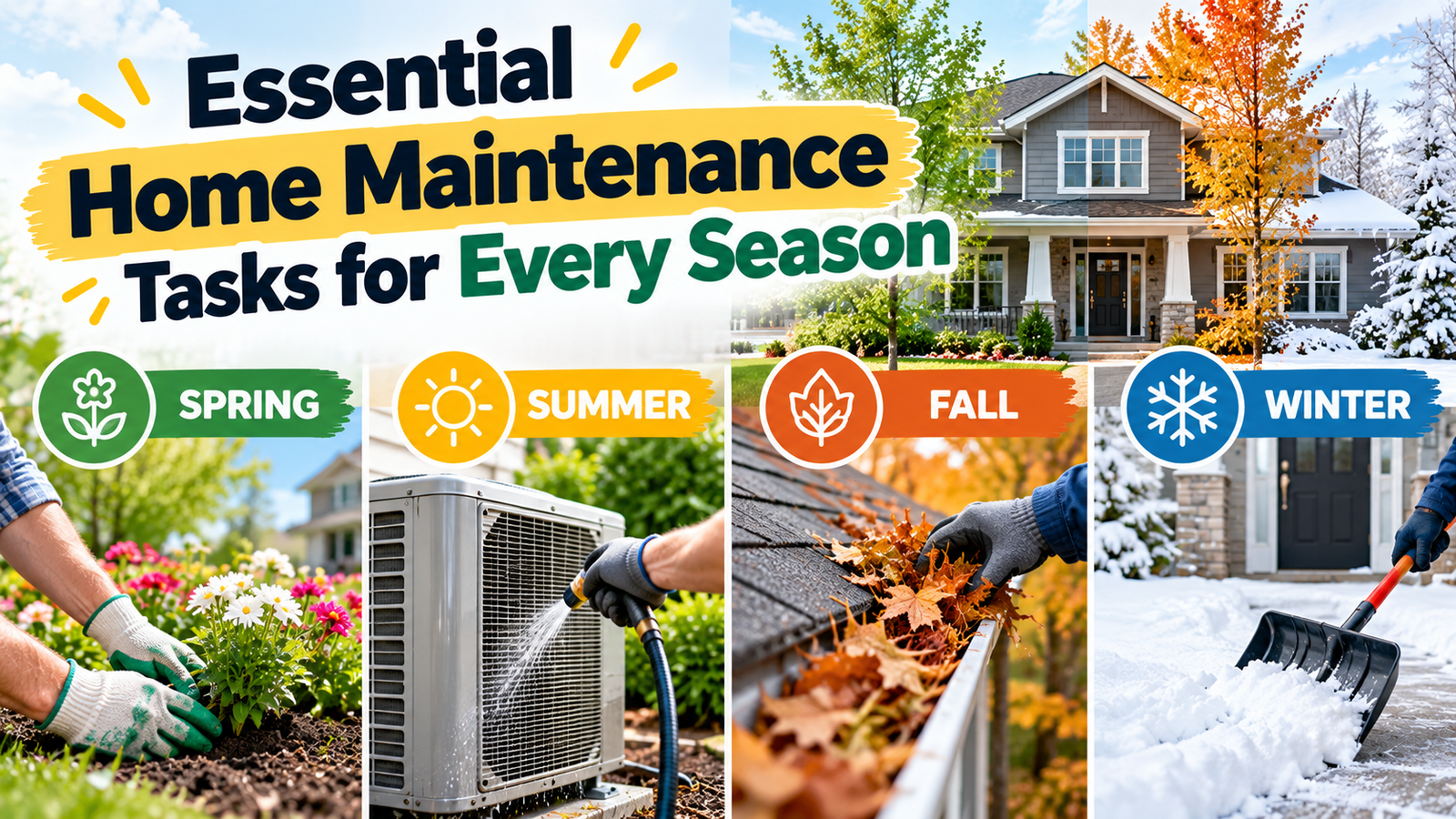
In this guide, I will explain essential home maintenance tasks for every season, including spring cleaning, summer preparation, autumn inspections, and winter safety checks. These practical home maintenance tips can help you develop a routine that protects your property throughout the year.
Why Seasonal Home Maintenance Matters
Seasonal home maintenance helps you keep track of different areas of your property instead of waiting until a problem becomes obvious.
For example, a small roof leak may initially cause only a minor stain, but continued moisture can damage ceilings, walls, and other materials. Similarly, a blocked drain can lead to unpleasant odors or water overflow, while a poorly maintained air conditioner may provide less effective cooling.
Regular inspections can help you notice signs of damage early. They also give you an opportunity to clean equipment, replace worn components, and prepare your home for upcoming weather conditions.
Another benefit is better organization. When maintenance tasks are divided throughout the year, you can spread the work across several months instead of trying to complete everything at once.
I recommend keeping a simple home maintenance checklist and recording the date when important tasks are completed. This makes it easier to remember recurring jobs and track repairs.
1. Spring Home Maintenance Tasks
Spring is a useful time to inspect the home after winter, clean areas that have been neglected, and prepare for warmer weather. The exact tasks depend on your climate, but several checks are useful for many households.
Inspect the Roof and Exterior Walls
Start by checking for visible signs of damage to the roof and exterior walls. Look for missing or damaged roofing materials, cracks, water stains, loose exterior components, and areas where moisture may be entering.
You can inspect accessible areas from the ground using binoculars if necessary. Avoid climbing onto a roof without the appropriate equipment and experience. If you notice significant damage or suspect a leak, contact a qualified roofing professional.
Exterior walls should also be checked for peeling paint, damaged sealant, or cracks that may allow water to enter. Small cosmetic issues are often easier to address before they develop into larger problems.
Clean Windows and Screens
Clean windows to improve natural lighting and remove accumulated dirt. Check window frames and seals for visible damage.
If your home has insect screens, inspect them for holes or loose edges. Repairing damaged screens can help reduce the number of insects entering the house when windows are open.
Use suitable cleaning products for your window materials and avoid methods that could scratch glass or damage frames.
Check Plumbing Fixtures
Inspect taps, sinks, toilets, and visible pipes for leaks. Look beneath kitchen and bathroom sinks for dampness, unusual odors, or signs of water damage.
A small leak may waste water over time and can damage cabinets or flooring. Tightening a suitable connection or replacing a worn washer may solve some minor issues, but persistent leaks should be handled by a qualified plumber.
Also check drains for slow water flow and remove accessible debris where safe.
Refresh Indoor Spaces
Spring is a convenient time to clean ceiling fans, light fittings, shelves, curtains, and other areas that collect dust.
Move furniture carefully to clean beneath it and check for signs of dampness or pests. Wash washable curtains and cushion covers according to their care instructions.
Decluttering can also make maintenance easier. Remove broken items, organize stored belongings, and create clear access to electrical panels, plumbing fixtures, and other important household equipment.
2. Summer Home Maintenance Tasks
Summer often brings higher temperatures, increased cooling needs, and greater water consumption. Preparing your home for hot weather can improve comfort and help prevent avoidable problems.
Maintain Air Conditioners and Fans
Cooling equipment often works harder during hot weather. Before periods of heavy use, inspect air conditioner filters and clean or replace them according to the manufacturer’s instructions.
Keep vents clear and make sure the outdoor unit has adequate airflow. Remove accessible leaves or debris around the unit without damaging its components.
If the air conditioner is making unusual noises, leaking, or failing to cool properly, arrange professional servicing. Refrigerant handling and electrical repairs should be completed by qualified technicians.
Clean ceiling fan blades and check that fans operate properly. Efficient airflow can improve comfort and may help you use air conditioning more effectively.
Check Doors and Windows for Air Leaks
Inspect door and window seals for visible gaps or damage. In hot weather, unwanted outdoor air entering a cooled room can make indoor temperatures harder to control.
Suitable weatherstripping or sealant may help reduce air leakage. Before sealing a gap, make sure it is not an intentional ventilation opening or a necessary drainage feature.
Use curtains, blinds, or other suitable window coverings to reduce direct sunlight during the hottest parts of the day. This can help limit indoor heat gain.
Inspect Water Systems
Higher temperatures can increase water demand, especially in homes with gardens or outdoor washing areas.
Check outdoor taps, hoses, irrigation systems, and visible plumbing connections for leaks. Repairing a dripping tap or damaged hose can reduce unnecessary water consumption.
If you use a water storage tank, inspect it according to the manufacturer’s recommendations and local water safety guidance. Keep it properly covered and arrange appropriate cleaning or maintenance when required.
Avoid allowing water to collect around the home, as stagnant water may attract mosquitoes.
Protect Outdoor Furniture and Equipment
Inspect outdoor furniture, fences, gates, and other exposed items for damage caused by sunlight, heat, or moisture.
Clean suitable surfaces and apply protective treatments when recommended by the manufacturer. Check that outdoor electrical equipment is rated for its intended environment and remains in good condition.
Store items that could be damaged by extreme weather in a suitable sheltered area.
3. Autumn Home Maintenance Tasks
Autumn is a good time to prepare for colder weather, increased rainfall, or seasonal storms where these conditions occur. It is also an opportunity to inspect drainage systems and complete repairs before weather becomes more difficult.
Clean Gutters and Drainage Channels
Leaves, dust, and other debris can block gutters and drains. When water cannot flow freely, it may overflow onto walls, damage exterior finishes, or collect near the foundation.
Inspect accessible gutters and drainage channels and remove debris when it is safe to do so. If gutters are high, unstable, or difficult to reach, hire a professional.
Check that downspouts direct water away from the building where the drainage design allows it.
After heavy rain, observe whether water drains properly from outdoor areas. Persistent pooling may indicate a blocked drain or a grading problem that requires further investigation.
Inspect the Roof Before Heavy Rain
Check for visible damage to roofing materials, flashing, and other roof components. Look for signs of water entry in the attic or upper rooms, such as damp patches, musty odors, or discoloration.
If you discover a leak, arrange repairs promptly. Do not attempt to work on a wet or slippery roof.
Even if the roof appears to be in good condition, regular inspections can help identify deteriorating materials before they fail during severe weather.
Seal Appropriate Gaps and Cracks
Inspect exterior doors, windows, and suitable joints for damaged sealant or weatherstripping.
Repairing gaps can improve comfort, reduce drafts, and help limit the entry of dust and insects.
Use materials intended for the specific surface and application. Some cracks may indicate structural movement or water damage, so avoid simply covering them without understanding the cause.
If a crack is growing, unusually wide, or accompanied by sticking doors or other changes, seek advice from a qualified building professional.
Prepare Outdoor Areas
Secure loose garden furniture, inspect fences and gates, and clear debris from outdoor spaces.
Check that paths and steps are in good condition and that outdoor lighting works properly. Repair uneven surfaces where practical to reduce the risk of trips and falls.
If heavy rain or strong winds are common in your region, secure items that could be blown away and check that drainage routes are not blocked.
4. Winter Home Maintenance Tasks
Winter maintenance is particularly important in regions where temperatures fall significantly. Homes in warmer climates may not need every cold weather task, but indoor safety, moisture control, and plumbing inspections remain useful throughout the year.
Inspect Heating Equipment
If your home uses a furnace, boiler, space heater, or other heating equipment, arrange maintenance according to the manufacturer’s recommendations.
Check visible components for damage and keep heating equipment free from dust and obstructions.
Never use an outdoor charcoal grill, generator, or fuel burning appliance intended for outdoor use inside the home. These devices can produce dangerous carbon monoxide.
Fuel burning heating systems should be properly installed, vented, and maintained. Make sure appropriate carbon monoxide alarms are installed where required and test them according to their instructions.
If a heater smells unusual, produces smoke, or operates abnormally, turn it off when safe and seek professional assistance.
Protect Plumbing in Cold Weather
In areas where pipes may freeze, protect exposed plumbing and insulate vulnerable pipes using suitable materials.
During severe cold, follow local guidance for maintaining safe indoor temperatures and protecting plumbing. If you plan to leave the home for an extended period, prepare the water system according to professional advice.
Know where the main water shutoff valve is located so you can respond quickly if a pipe bursts.
If a pipe freezes, avoid using an open flame to thaw it. Contact a qualified plumber if you cannot safely resolve the problem.
Homes in climates without freezing temperatures may not require these specific precautions, but checking for leaks and maintaining plumbing fixtures is still important.
Check Windows and Doors for Drafts
Cold air entering through gaps can make indoor spaces uncomfortable and increase heating costs.
Inspect window seals, door sweeps, and weatherstripping for damage. Replace worn components where appropriate.
Use suitable curtains to improve comfort near windows, while keeping fabric away from heaters and other heat sources.
Make sure any sealing improvements do not block required ventilation or create unsafe conditions for fuel burning appliances.
Reduce Indoor Moisture
During colder months, indoor moisture can accumulate when ventilation is limited.
Use bathroom and kitchen exhaust fans where available, particularly during showers and cooking. Repair leaks promptly and dry wet areas when possible.
Watch for condensation on windows, musty smells, or recurring damp patches. These may indicate ventilation problems, excessive indoor humidity, or water entry.
If mold appears repeatedly, investigate the moisture source rather than simply cleaning the visible growth. Seek professional help if the affected area is extensive or the cause is unclear.
5. Essential Tasks to Complete Throughout the Year
Some home maintenance tasks should not be limited to a particular season. A regular schedule helps keep essential systems in good condition.
Test Smoke and Carbon Monoxide Alarms
Test smoke alarms and carbon monoxide alarms according to the manufacturer’s instructions and local safety recommendations.
Replace batteries or the entire unit when required. Check expiration dates and follow the manufacturer’s guidance about replacement.
Install alarms in the locations recommended by local building and fire safety guidance.
Never ignore an alarm that indicates smoke or possible carbon monoxide. Leave the affected area and contact emergency services when appropriate.
Inspect Electrical Components
Check accessible electrical cords, plugs, switches, and outlets for visible damage, discoloration, or unusual heat.
Avoid overloading power strips and keep electrical equipment away from water. Damaged wiring, repeated circuit breaker trips, buzzing outlets, or burning smells require prompt attention from a qualified electrician.
Do not attempt electrical repairs unless you have the appropriate training and authorization.
Check Fire Safety Equipment
Make sure fire extinguishers are accessible where appropriate and that their pressure indicators, inspection labels, and condition meet the manufacturer’s requirements.
Keep exits and pathways clear. Store flammable materials safely and follow the instructions supplied with heating and cooking equipment.
Review your household’s emergency plan so everyone knows how to leave the home safely if necessary.
Inspect Appliances
Look for unusual noises, poor performance, damaged cords, or leaks from washing machines, dishwashers, refrigerators, and other appliances.
Clean filters and removable components according to the manufacturer’s instructions.
Arrange professional repairs when needed. Regular maintenance can extend appliance life and help identify problems before they cause more damage.
6. Create a Simple Seasonal Home Maintenance Checklist
A written checklist makes home maintenance easier to manage. Instead of remembering every task, you can assign jobs to specific months and record when they are completed.
Here is a simple example you can adapt to your home.
| Season | Important maintenance tasks |
|---|---|
| Spring | Inspect roof and walls, clean windows, check plumbing, declutter rooms |
| Summer | Maintain cooling equipment, check water leaks, inspect outdoor areas |
| Autumn | Clean gutters, inspect drainage, check roof condition, repair suitable gaps |
| Winter | Check heating equipment, manage indoor moisture, protect pipes where freezing occurs |
| Every month | Check for leaks, test alarms as instructed, inspect visible electrical damage, review maintenance needs |
This checklist is a starting point rather than a strict schedule. Adjust it to match your local climate, building design, and equipment instructions.
You may also keep a small maintenance notebook or digital document with the date, task, repair details, and any follow up work required.
7. Know When to Hire a Professional
Some maintenance tasks are suitable for homeowners, while others require specialist knowledge and equipment.
Cleaning accessible surfaces, organizing storage, checking visible plumbing for leaks, and replacing certain filters may be manageable for many people.
However, roof repairs, major plumbing work, electrical repairs, structural concerns, and servicing of specialized heating or cooling equipment should be handled by qualified professionals when appropriate.
Do not take unnecessary risks by climbing ladders, working near live electrical equipment, or entering unsafe roof spaces.
If you notice serious water damage, large cracks, persistent mold, repeated electrical problems, or unusual structural changes, seek a professional assessment.
Hiring an experienced technician may cost money initially, but it can help prevent unsafe repairs and further damage.
8. Budget for Home Maintenance
Planning for maintenance expenses can make homeownership more manageable.
Start by listing recurring costs, such as appliance servicing, filter replacements, pest control where needed, and routine plumbing inspections.
Set aside a manageable amount regularly for repairs. The amount will depend on your home’s age, size, condition, and local repair costs.
Keep records of major repairs and warranties. These documents can help you remember when equipment was installed or serviced and may be useful if a problem develops later.
Prioritize issues according to safety and potential damage. Electrical hazards, active leaks, and serious structural concerns should receive attention before cosmetic improvements.
You do not have to complete every improvement immediately. A planned approach helps you address the most important tasks first while managing your budget responsibly.
Conclusion
Essential home maintenance tasks for every season help keep your property safe, comfortable, and in good condition. By inspecting important areas regularly, cleaning equipment, checking for leaks, and preparing for local weather conditions, you can often identify problems before they become more expensive.
Spring is a useful time for general inspections and cleaning, summer is ideal for checking cooling systems and water use, autumn provides an opportunity to prepare for storms or colder weather, and winter calls for attention to heating, plumbing, and indoor moisture where relevant.
In my view, the best home maintenance routine is simple, consistent, and suited to the property. You do not need to complete every task in one weekend or spend a large amount of money at once. Start with a checklist, schedule a few tasks each month, and keep records of important repairs.
Most importantly, put safety first. Handle simple maintenance tasks yourself when appropriate, and contact qualified professionals whenever a job involves significant risk or specialized equipment.
With regular attention and thoughtful planning, you can protect your home, reduce avoidable repair expenses, and enjoy a cleaner and more comfortable living environment throughout the year.