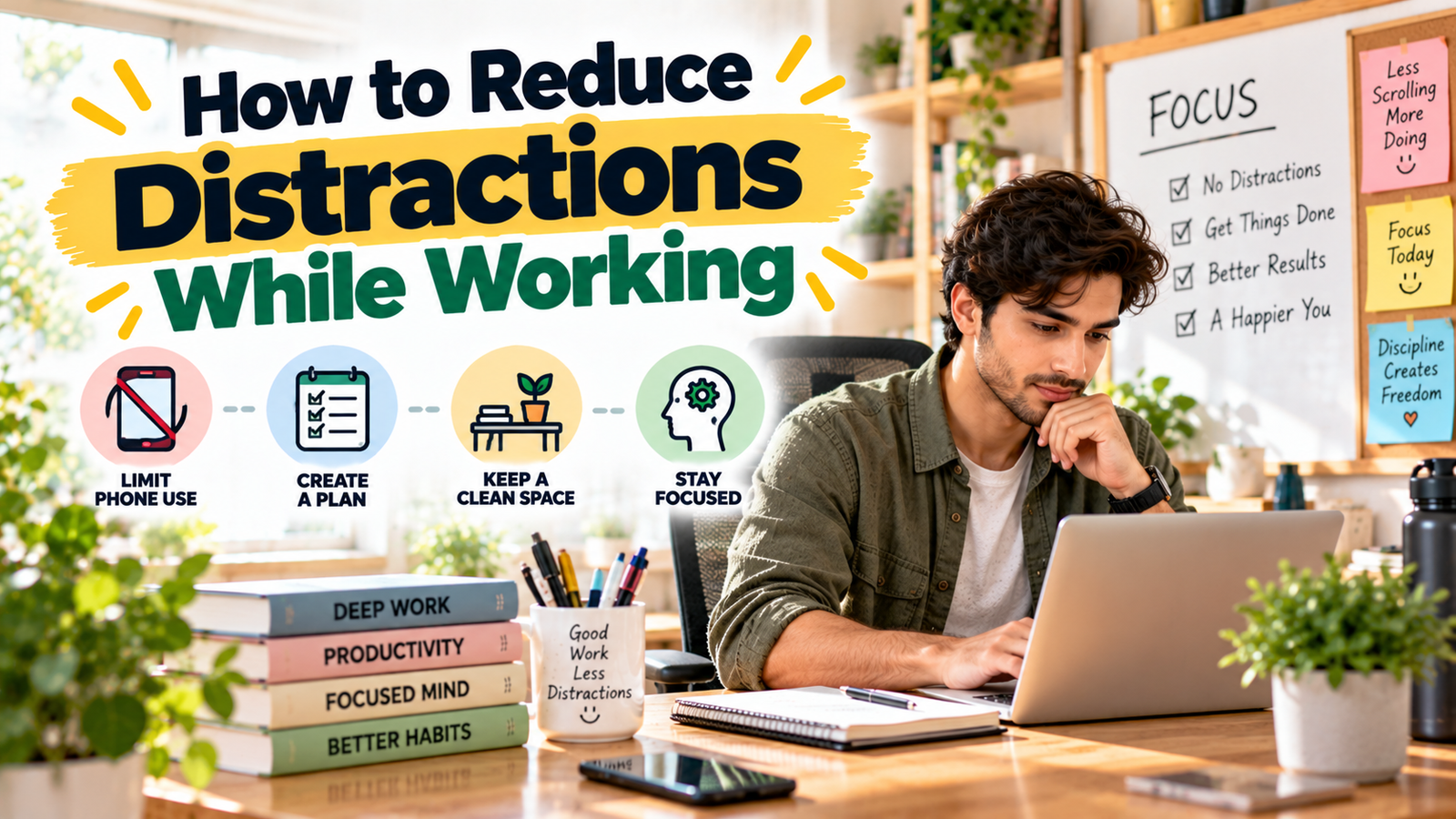
Staying focused while working can be difficult, especially when we have to manage multiple responsibilities, notifications, household activities, and unexpected interruptions. Even when we have important tasks to complete, a small distraction can break our concentration and make the work take longer than expected. For busy people, learning how to reduce distractions while working can make a real difference in productivity and daily time management.
In my opinion, improving focus does not require a perfect workplace or expensive productivity tools. The most important thing is to understand what interrupts your attention and develop simple habits that help you stay focused. Small changes, such as organizing your workspace, planning your tasks, limiting phone notifications, and taking regular breaks, can make working more manageable.
Whether you work from home, study, manage a business, or work in an office, you can use practical strategies to reduce interruptions and complete important tasks more efficiently.
In this article, I will explain how to reduce distractions while working, build better concentration habits, and create a working environment that supports productivity.
1. Identify What Distracts You Most
The first step toward reducing distractions is understanding where they come from. Different people experience different problems, so a solution that works for one person may not work equally well for another.
For example, some people lose focus because they frequently check social media. Others are distracted by background noise, conversations, household responsibilities, or a crowded workspace.
Spend a day observing your working habits. Notice when you lose concentration, what causes the interruption, and how long it takes you to return to your task.
You might discover that you check your phone whenever a task becomes difficult. Alternatively, you may notice that working in a busy room makes it hard to concentrate.
Once you identify the main causes, you can choose more effective solutions.
There is no need to eliminate every possible distraction immediately. Start with the one that affects your work most often and make a practical change.
Understanding your habits gives you a clearer starting point for improving concentration.
2. Create a Clean and Organized Workspace
Your working environment can influence how easily you concentrate. A crowded desk, misplaced documents, tangled cables, and unnecessary objects can make it harder to begin or continue important tasks.
Before starting work, spend a few minutes organizing your workspace. Remove items that you do not need for the current task and keep essential materials within reach.
For example, if you are writing an article, keep your computer, notebook, and relevant research materials nearby. Put unrelated papers and personal belongings aside until you need them.
You do not need an expensive desk or a separate office to create an organized workspace. A small table or a suitable corner of your home can work well if it is reasonably comfortable and organized.
Try to keep frequently used items in consistent places. This reduces the time you spend searching for things and helps you begin work more quickly.
A clean workspace will not remove every distraction, but it can make your daily work routine simpler and more comfortable.

3. Turn Off Unnecessary Phone Notifications
Smartphone notifications are among the most common sources of interruption during work. Messages, social media alerts, news updates, and application notifications can repeatedly pull your attention away from important tasks.
Even a quick glance at your phone can interrupt your concentration. After checking a notification, you may find yourself reading additional messages or browsing unrelated content.
To reduce this problem, silence nonessential notifications during focused work sessions. You can use your phone’s Do Not Disturb or Focus mode if available.
If you do not need your phone for work, place it away from your immediate workspace. Keeping it out of sight may make it easier to resist checking it repeatedly.
You can also schedule specific times to respond to personal messages instead of replying immediately to every notification.
However, make sure you remain reachable for genuinely urgent responsibilities when necessary.
The goal is not to stop using your phone completely. It is to control when you use it so that notifications do not constantly interrupt your attention.
4. Plan Your Tasks Before Starting Work
Working without a clear plan can make it easier to become distracted. When you are unsure what to do next, you may switch between tasks, check messages, or spend time on activities that are less important.
A simple daily task list can help you avoid this problem.
Before beginning work, write down the tasks you need to complete. Then identify the two or three activities that deserve the most attention.
For example, your priorities might include completing a report, responding to essential emails, and preparing materials for a meeting.
Start with an important task and decide what a successful work session should accomplish. Instead of writing “work on project,” define a specific action, such as “finish the first section of the project report.”
Clear tasks are easier to begin because they provide a direct next step.
Keep your list realistic. If you schedule more work than you can reasonably complete, you may feel pressured and become more likely to switch between activities.
Planning helps you use your time intentionally rather than allowing every new interruption to determine your next action.
5. Focus on One Task at a Time
Trying to handle several demanding activities simultaneously can reduce concentration. For example, writing a report while checking emails and watching videos may seem efficient, but switching between these activities can interrupt your thinking.
A better approach is to focus on one important task at a time whenever possible.
Choose the task you want to complete, gather the materials you need, and avoid opening unrelated applications or documents until the work session is finished.
If another task comes to mind, write it down on a separate list instead of immediately switching to it. You can return to that task later.
For example, if you are preparing a presentation and remember that you need to pay a bill, make a quick note and continue working unless the payment is urgent.
Single tasking is particularly helpful for activities that require careful thinking, writing, planning, or problem solving.
You may still need to manage multiple responsibilities throughout the day, but handling them in separate blocks can make each activity easier to complete.
6. Use the Pomodoro Technique
The Pomodoro Technique is a time management method that divides work into focused sessions separated by short breaks. It can be useful when you struggle to concentrate for long periods.
A common approach is to work for 25 minutes and then take a five minute break. After completing four sessions, you can take a longer break.
During each work session, focus on one task and avoid unnecessary interruptions. Use the break to stretch, drink water, or briefly move away from your desk.
You can adjust the timing to suit your needs. Some tasks may require longer periods of concentration, while others are easier to complete in shorter sessions.
For example, you might use a 25 minute session to write part of an article or organize important documents.
If you are working on something that requires deep concentration, you may prefer a longer session with fewer interruptions.
The main purpose is to create a clear boundary between focused work and rest. This can make large tasks feel more manageable and help you recognize how you spend your time.
7. Limit Social Media During Working Hours
Social media can be entertaining and useful, but frequent browsing may interfere with work. One short visit can easily turn into twenty minutes of watching videos, reading comments, or following unrelated links.
If social media regularly distracts you, establish simple limits.
For example, decide to check your personal accounts during lunch or after completing an important task. You can also log out of distracting websites or remove their shortcuts from your browser.
If necessary, use website blocking or screen time features to limit access during selected hours.
Try to notice why you open social media. Sometimes people check their phones because they are bored, tired, uncertain about a task, or looking for a quick break.
When this happens, choose a more useful response. If you are tired, take a short break. If a task seems difficult, divide it into smaller steps.
You do not need to remove social media from your life. Setting clear boundaries can help you enjoy it without allowing it to dominate your working time.
8. Reduce Noise and Environmental Interruptions
Noise can make concentration difficult, particularly when your work involves reading, writing, calculations, or detailed thinking.
If possible, choose a quieter place to work. A room with fewer interruptions may help you concentrate better than a busy shared area.
When working from home, you could agree with family members on specific periods when interruptions should be limited, while remaining flexible for important household needs.
If you work in a shared office, consider using earplugs or suitable headphones when permitted and safe. Soft background sounds may help some people concentrate, while others perform better in silence.
Avoid choosing audio that repeatedly attracts your attention if your goal is to complete a demanding task.
You can also reduce environmental interruptions by closing unnecessary doors, organizing your materials in advance, and keeping your work area separate from entertainment activities when practical.
Not every environment can be made completely quiet. Focus on changes that are realistic for your circumstances.
9. Set Clear Boundaries With Other People
Interruptions from colleagues, friends, or family members can make it difficult to complete focused work. Although some conversations are necessary, frequent interruptions can break your concentration.
One useful strategy is to communicate your working schedule clearly.
For example, you might explain that you need uninterrupted time for a particular task and will be available afterward. In an office, you could use an appropriate status message to show when you are focusing on an important assignment.
If someone interrupts you, respond politely and determine whether the matter requires immediate attention. If it can wait, suggest a suitable time to discuss it.
For people working from home, a consistent routine may help household members understand when you are available.
At the same time, recognize that some responsibilities cannot be postponed. Parents, caregivers, and people in customer facing roles may need a more flexible approach.
The purpose of setting boundaries is to protect concentration where possible while continuing to meet important responsibilities.
10. Take Regular Breaks to Refresh Your Mind
Trying to work continuously for several hours may lead to mental fatigue. When you become tired, you may find it harder to concentrate, make decisions, or resist distractions.
Regular breaks can help you maintain a more sustainable working routine.
Stand up, stretch gently, drink water, or walk for a few minutes between demanding tasks. If you have been looking at a screen for a long time, give your eyes a chance to rest by looking away from it regularly.
Keep breaks reasonably short when you need to return to a specific task, but allow yourself longer rest periods when appropriate.
Avoid turning every break into an extended social media session if doing so makes it difficult to resume work.
It is also important to recognize when you need genuine rest. If you are consistently exhausted, review your workload and sleep habits rather than trying to solve every concentration problem with stricter scheduling.
Rest and productivity can support each other. A balanced routine is often easier to maintain than one that demands constant effort.
11. Break Difficult Tasks Into Smaller Steps
Sometimes the main distraction is not your environment but the task itself. A large or complicated assignment may feel overwhelming, making it tempting to check your phone or move to an easier activity.
Breaking the work into smaller steps can make it easier to begin.
For example, instead of trying to complete an entire report in one sitting, divide it into research, outlining, drafting, editing, and final review.
Choose one step and focus on completing it before moving forward.
This approach helps you understand exactly what needs to be done and provides a clearer sense of progress.
If you are unsure how to begin, set a small starting goal. You might spend ten minutes gathering information or writing the first paragraph.
Getting started is often easier when you are not thinking about the entire project at once.
Once you build momentum, continuing the task may become more manageable.
12. Manage Emails and Messages at Set Times
Emails and messages are important in many jobs, but checking them constantly can interrupt other responsibilities.
Instead of responding to every message as soon as it arrives, consider checking your inbox at planned times when your work allows.
For example, you might review emails at the beginning of the day, after completing an important task, and before finishing work.
During focused sessions, close your inbox or turn off its notifications if you do not need to monitor it continuously.
When checking messages, handle straightforward requests efficiently and identify those that require more time.
Some roles require immediate responses, so this approach should be adjusted to your professional responsibilities. If urgent communication is part of your job, create separate periods for focused work that still allow essential messages to reach you.
The aim is to prevent routine communication from consuming every available moment.
13. Build a Consistent Working Routine
A consistent routine can make it easier to begin work and reduce the number of decisions you need to make each day.
Try to establish a regular starting time when your schedule allows. Begin with a simple activity, such as reviewing your priorities, preparing your workspace, and selecting your first task.
You can also create a short end of day routine. Review completed work, note unfinished tasks, organize your desk, and prepare for the following day.
These habits provide structure without requiring a strict schedule for every minute.
If you work at home, a clear start and finish routine can also help separate professional responsibilities from personal time.
Your routine does not need to be identical every day. Unexpected events and changing workloads may require adjustments.
The goal is to create a reliable structure that helps you return to focused work even when your day becomes busy.
14. Review Your Progress and Improve Your Focus
Reducing distractions is an ongoing process. A strategy that works well in one situation may be less effective in another.
At the end of each day or week, take a few minutes to review your working habits.
Ask yourself which distractions interrupted you most often, which tasks you completed successfully, and what changes helped you maintain concentration.
You may discover that you work better in the morning, that phone notifications are your biggest problem, or that your workspace needs better organization.
Use these observations to adjust your routine.
For example, you could schedule demanding work during your most productive hours, prepare materials in advance, or set clearer limits on personal phone use.
Avoid expecting immediate perfection. Some days will be more productive than others, and unexpected interruptions are part of normal life.
Focus on making gradual improvements that you can maintain over time.
Common Mistakes to Avoid When Trying to Stay Focused
When learning how to reduce distractions while working, it helps to recognize habits that may make the problem worse.
Trying to eliminate every distraction: Some interruptions are unavoidable. Focus on reducing unnecessary ones rather than expecting complete silence or perfect conditions.
Creating an unrealistic schedule: A schedule that leaves no room for breaks or unexpected tasks can become stressful. Allow flexibility.
Keeping too many tasks open: Switching between several demanding activities can make it harder to concentrate. Complete one task or a clear portion of it before moving on.
Ignoring fatigue: Tiredness can make concentration more difficult. Include reasonable breaks and prioritize adequate rest.
Using too many productivity tools: Complicated systems can consume time instead of saving it. Choose a simple approach that works for you.
Expecting instant results: Focus is a skill that can improve with practice. Be patient and adjust your methods when necessary.
Avoiding these mistakes can help you develop a more realistic approach to focused work.
Conclusion
Learning how to reduce distractions while working begins with understanding what interrupts your attention and making practical changes to your daily routine. Organizing your workspace, limiting unnecessary notifications, planning important tasks, focusing on one activity at a time, and taking regular breaks can help you work more efficiently.
In my opinion, the most effective approach is to start with the distractions that affect you most. You do not need to change everything at once or follow a complicated productivity system. Choose one or two strategies, practice them regularly, and adjust your routine according to your needs.
Remember that productivity is not about working without stopping. It is about giving your attention to the right tasks while allowing enough time for rest and other responsibilities.
With consistent effort and a suitable working environment, you can build better concentration habits, manage your time more effectively, and make steady progress toward your daily goals.