Introduction
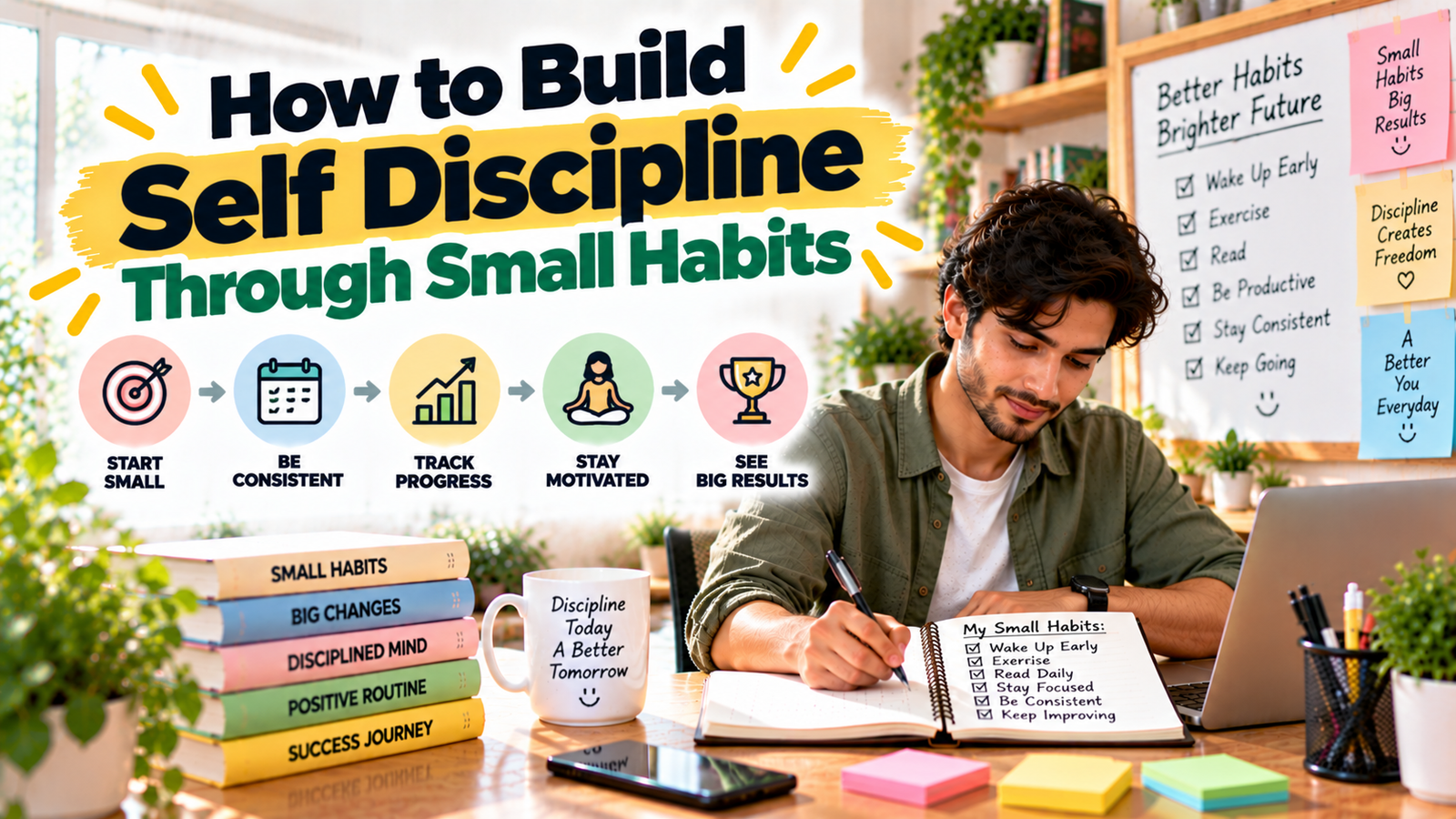
Self discipline is one of the most important skills we can develop to improve our daily lives. It helps us stay focused on our goals, manage our time, complete important tasks, and make better decisions even when we do not feel motivated. However, building self discipline does not always require major changes or strict routines. In my opinion, the best way to develop this skill is to start with small habits that are easy to practice every day.
Many people believe that self discipline means forcing themselves to work hard all the time. I see it differently. Self discipline is about learning to take consistent action, even when a task feels boring or difficult. It is about keeping promises to yourself and gradually developing routines that support your goals.
For example, reading five pages of a book every day may seem like a small achievement. However, when this habit becomes part of your routine, it can help you develop consistency and a stronger sense of responsibility. The same principle applies to exercise, studying, time management, and personal development.
In this article, I will explain how to build self discipline through small habits, why consistency matters, and how simple daily actions can help you become more organized, focused, and productive.
What Is Self Discipline?
Self discipline is the ability to manage your actions, emotions, and decisions so that you can work toward meaningful goals. It helps you choose activities that support your long term plans instead of always following immediate desires.
For example, you may feel like watching videos when you have an important assignment to complete. Self discipline helps you recognize your responsibility and spend some time working on the assignment before relaxing.
This does not mean that you should never enjoy entertainment or take breaks. A balanced life includes both responsibilities and enjoyable activities. Self discipline helps you decide when to work, when to rest, and how to maintain a healthy balance.
It is also important to understand that self discipline is not something people either have or lack permanently. It can improve through practice. Small habits give you regular opportunities to strengthen your ability to follow through on your intentions.
1. Start With Small and Simple Habits
One of the easiest ways to build self discipline is to begin with habits that require very little effort. When you attempt to change your entire lifestyle at once, the process can become overwhelming.
For example, if you want to become more physically active, you do not need to begin with an intense workout every morning. You can start with a five minute walk and gradually increase the duration as the habit becomes easier.
Similarly, if your goal is to read more, begin with a few pages each day instead of expecting yourself to finish an entire book every week.
Small habits reduce the difficulty of getting started. They also allow you to practice consistency without placing too much pressure on yourself.
I believe the most important thing at the beginning is not the amount of work you complete. It is your ability to repeat the action regularly.
Once a small habit becomes familiar, you can increase the effort according to your needs and abilities.
2. Set Clear and Realistic Goals
Self discipline becomes easier when you know exactly what you want to achieve. Vague goals can make it difficult to decide what action to take each day.
For example, saying that you want to become more productive does not provide a clear plan. A more practical goal would be to spend 30 minutes working on your most important task every morning.
Clear goals give your daily habits a purpose. They also help you recognize whether your actions are moving you in the right direction.
When setting goals, consider your current routine, available time, and responsibilities. Choose targets that challenge you without becoming unrealistic.
You can divide a larger goal into smaller milestones. If you want to complete an online course, for example, decide how many lessons you will study each week. Focus on completing one lesson at a time rather than worrying about the entire course.
This approach makes progress easier to measure and helps you remain focused on what you can do today.
3. Create a Consistent Daily Routine
A daily routine can help you practice self discipline because it reduces the number of decisions you need to make.
When you decide in advance when to study, exercise, work, or read, you do not have to create a new plan every day.
For example, you might spend the first 15 minutes of your morning reviewing your schedule, use a specific period for focused work, and reserve the evening for reading or preparing for the next day.
Your routine does not need to follow a complicated timetable. It should simply provide structure for the activities that matter to you.
Start by selecting two or three habits that support your priorities. Practice them consistently before adding more activities.
It is also helpful to keep your routine flexible. Unexpected responsibilities, family needs, and changes in energy can affect your plans. A useful routine allows you to adjust without abandoning your goals completely.
The purpose of a daily routine is to make positive actions easier to repeat, not to control every minute of your life.
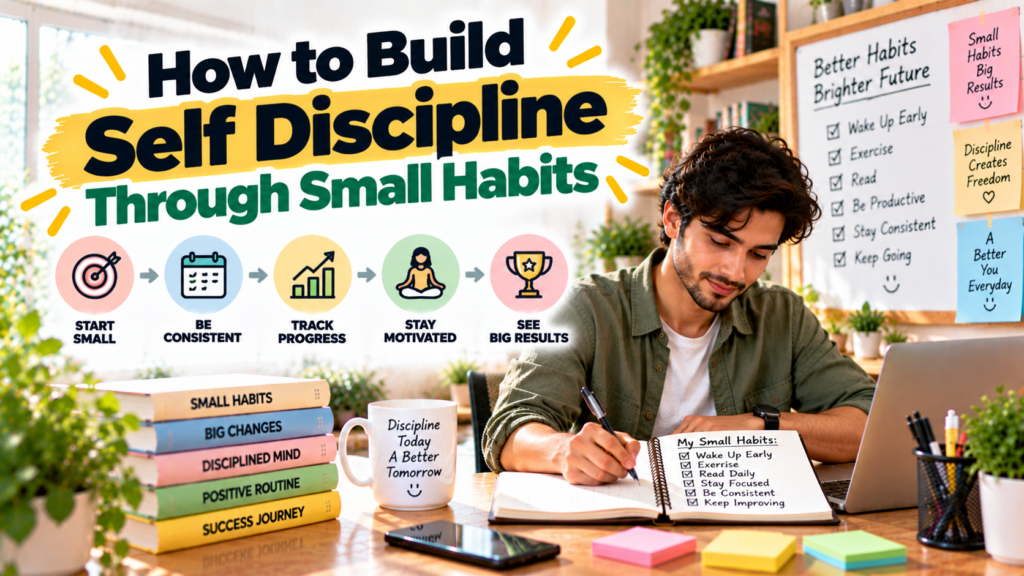
4. Connect New Habits With Existing Habits
One practical way to develop small habits is to connect them with activities you already perform regularly.
For example, if you drink tea every morning, you could spend five minutes reviewing your daily goals immediately afterward. If you usually prepare for bed at the same time, you could read a few pages of a book before sleeping.
This technique gives your new habit a familiar starting point.
You can use the following simple structure: after completing an existing activity, perform the new habit.
Here are a few examples:
- After breakfast, review your most important task.
- After returning home, spend ten minutes organizing your workspace.
- After lunch, take a short walk if your schedule allows.
- Before going to bed, prepare a simple plan for tomorrow.
Connecting habits in this way makes them easier to remember. Over time, the existing activity can serve as a reminder to perform the new one.
Choose connections that fit naturally into your lifestyle rather than forcing habits into inconvenient parts of your day.
5. Learn to Manage Distractions
Distractions can make self discipline difficult, especially when you are working on tasks that require concentration.
Mobile phone notifications, social media, unnecessary browsing, and background noise can interrupt your attention. Even brief interruptions may make it harder to return to a task.
Instead of relying entirely on willpower, try to create an environment that supports your goals.
For example, place your phone away from your workspace when studying. Turn off nonessential notifications and keep only the materials you need nearby.
You can also divide your work into short focus sessions. Start with 15 or 20 minutes of uninterrupted work and take a brief break afterward.
If you often open social media automatically, consider setting specific times for checking your accounts rather than allowing them to interrupt every activity.
In my view, managing distractions is an important part of self discipline because it makes the right action easier to choose.
You do not need to eliminate every distraction. You simply need to reduce the ones that repeatedly prevent you from completing important work.
6. Practice Doing Small Things Even When You Lack Motivation
Motivation naturally changes from day to day. Sometimes you feel energetic and ready to work, while on other days you may feel tired or uninterested.
If you depend entirely on motivation, your habits may become inconsistent.
Self discipline helps you continue with manageable actions even when your enthusiasm is low.
For example, if you planned to read for 20 minutes but feel tired, you might read one page instead. If you planned to organize your workspace, you could spend five minutes clearing unnecessary items.
These smaller actions allow you to maintain a connection with your habit without demanding more energy than you have available.
However, it is important to recognize the difference between ordinary reluctance and genuine exhaustion. Rest is necessary, and pushing yourself constantly can make routines harder to maintain.
The goal is not to ignore your needs. It is to avoid abandoning useful habits simply because you do not feel motivated at a particular moment.
7. Track Your Daily Progress
Tracking your habits can help you understand whether you are following your plan.
You do not need an expensive application or a complicated system. A notebook, calendar, or simple checklist can be enough.
For example, if you want to develop a daily reading habit, mark each day when you complete your reading session. At the end of the week, review how often you practiced the habit.
This process provides a clear picture of your progress. It can also help you identify patterns that make consistency difficult.
Perhaps you regularly miss your morning routine because you wake up late. Maybe your evening reading habit is interrupted by household responsibilities. Once you identify the problem, you can adjust the timing or choose a more suitable activity.
Remember that tracking is meant to support your progress, not make you feel guilty.
Missing one day does not erase the effort you have already made. Focus on returning to the habit instead of giving up because your record is no longer perfect.
8. Build Better Time Management Habits
Time management and self discipline are closely connected. When you use your time intentionally, it becomes easier to complete important activities without unnecessary pressure.
Start by identifying the two or three tasks that matter most each day. Write them down before beginning your work.
Try to complete an important task before spending too much time on entertainment or less urgent activities.
For example, if you need to study, decide to review one chapter before watching your favorite program. If you have a work project, spend a focused period making progress before checking unrelated messages.
You can also prepare your workspace and materials in advance. This reduces the effort required to begin the next day.
Avoid filling your schedule with too many tasks. A realistic plan gives you enough time to work, rest, and handle unexpected responsibilities.
Effective time management is not about being busy every minute. It is about using your available time in ways that reflect your priorities.
9. Make Your Environment Support Your Habits
Your surroundings can influence your daily behavior more than you might realize.
If you want to read regularly, keep a book somewhere easy to reach. If you want to exercise at home, prepare your exercise clothes in advance. If you want to spend less time on your phone, avoid keeping it directly beside you while working.
These small changes reduce the effort required to perform positive habits.
You can also remove reminders of habits you want to reduce. For example, logging out of distracting applications may help you think twice before opening them.
Consider organizing your environment according to the goals you want to achieve.
A clean desk can make studying more comfortable, while a prepared workspace can help you begin work without searching for supplies.
You do not need a perfect environment to build self discipline. Even a few practical changes can make your desired behavior more convenient.
10. Be Patient and Learn From Mistakes
Building self discipline takes time. Some habits may become part of your routine quickly, while others may require repeated effort and adjustment.
It is normal to experience setbacks. You may miss a workout, delay a task, or forget to follow your schedule.
Instead of treating these moments as proof that you lack discipline, use them as opportunities to learn.
Ask yourself what made the habit difficult. Was the task too demanding? Did you choose an inconvenient time? Were there too many distractions? Could you make the next attempt simpler?
For example, if you repeatedly fail to wake up early to study, you might need to adjust your bedtime or schedule your study session for another part of the day.
Small adjustments can make a significant difference in how manageable a habit feels.
Be patient with yourself while remaining responsible for your choices. Progress often comes from repeating useful actions, recognizing mistakes, and finding better ways to continue.
11. Reward Yourself for Consistent Effort
Positive reinforcement can make habit building more enjoyable. When you complete a planned activity, take a moment to recognize the effort you made.
For example, after finishing a study session, you might enjoy a short break, listen to music, or spend some time on a favorite activity.
The reward does not need to be expensive or elaborate. The purpose is to create a positive connection with the process of following through on your intentions.
You can also celebrate meaningful milestones. If you have consistently practiced a habit for several weeks, acknowledge the progress you have made.
At the same time, avoid making rewards so large or time consuming that they interfere with your goals.
Remember that the long term benefit of a habit is often more important than an immediate reward. Reading can improve your knowledge, regular exercise can support your general well being, and planning can make daily responsibilities easier to manage.
Recognizing both immediate progress and long term benefits can help you maintain